Mule Camp Springs and the county seat
- Gainesville began as "Mule Camp Springs," near the crossing of two Indian trails. The Georgia Legislature chartered it as the seat of the new Hall County on Nov. 30, 1821. City of Gainesville: History
- At the suggestion of Justice John Vance Cotter, the town was named for Gen. Edmund P. Gaines, a War of 1812 hero and military surveyor and road-builder. The City's timeline dates the change from Mule Camp Springs to Gainesville to April 21, 1821. City of Gainesville: History
- Hall County was formed in 1818 and named for Lyman Hall, a Georgia signer of the Declaration of Independence. Gainesville was laid out in a grid on 50 acres donated by Duke Williams, and its original town plan is still evident downtown. National Register of Historic Places nomination: Hall County Courthouse (1995)
- Gainesville turned 200 on Nov. 30, 2021. The City notes it has been part of the nation's governmental framework longer than 26 of the 50 states. City of Gainesville: History
April 6, 1936
- On the morning of April 6, 1936, two large F4 tornadoes merged as they tore through downtown Gainesville. They killed 203 people, injured about 1,600 and caused about $13 million in damage at the time. National Weather Service: weather history for April 6
- Explore Gainesville's 1936 Tornado walking-tour guide says the storm hit downtown at 8:27 a.m. A clock on the Citizens Bank building was photographed stopped at 8:28. Explore Gainesville: "A City Laid Waste" 1936 Tornado walking tour (PDF)
- Seventy people were killed when the Cooper Pants Factory collapsed in the 1936 tornado. The National Weather Service calls it the highest death toll in a single building from one U.S. tornado. National Weather Service: weather history for April 6
- With 203 deaths, the April 6, 1936 Gainesville tornado ranks fifth on the Storm Prediction Center's list of the deadliest tornadoes in U.S. history. NWS notes the true toll may never be known. NOAA Storm Prediction Center: Deadliest U.S. Tornadoes
Roosevelt and the rebuilding
- President Franklin D. Roosevelt stopped in Gainesville days after the tornado, spoke words of encouragement and promised federal help. The courthouse's National Register nomination dates the visit to April 9, 1936, and Roosevelt later recalled passing through "a couple of days after the disaster." National Register nomination: Hall County Courthouse; The American Presidency Project
- In his 1938 Gainesville address, Roosevelt said the Reconstruction Finance Corporation had invested nearly $1 million to help rebuild the city. The Public Works Administration aided a courthouse, schools and water works, and the Works Progress Administration helped clear the wreckage and repair streets and parks. The American Presidency Project: FDR, Address at Gainesville, Georgia
- Roosevelt returned on March 23, 1938 to dedicate Gainesville's rebuilt civic center and spoke on the courthouse square. He told the crowd, "For this you, the citizens of Gainesville, deserve all possible praise." The American Presidency Project: Franklin D. Roosevelt, Address at Gainesville, Georgia (March 23, 1938)
- The blocks holding the new courthouse and city hall were declared "Roosevelt Squares" on a monument to FDR placed by the Hall County Board of Commissioners. In 1978 the two blocks were joined into one large square. National Register of Historic Places nomination: Hall County Courthouse (1995)
Two dates for one dedication
Roosevelt’s own address is dated March 23, 1938, and the Digital Library of Georgia agrees, so that is the date we use. The courthouse’s 1995 National Register nomination gives Thanksgiving Day, November 25, 1937 instead. We show both so you can check.
What the rebuild left on the square
- The Stripped Classical, marble-faced Hall County Courthouse at Spring and Green streets replaced the courthouse destroyed in 1936. Atlanta architects Daniell & Beutell designed it, it was completed in 1937, and it was listed on the National Register in 1995. It is the sixth Hall County courthouse. National Register of Historic Places nomination: Hall County Courthouse (1995)
- Gainesville's historic City Hall, built in 1937 after the tornado and designed by the same firm as the courthouse, has been renovated as an event venue at 117 Jesse Jewell Parkway. Explore Gainesville: Historic City Hall; NRHP Hall County Courthouse nomination
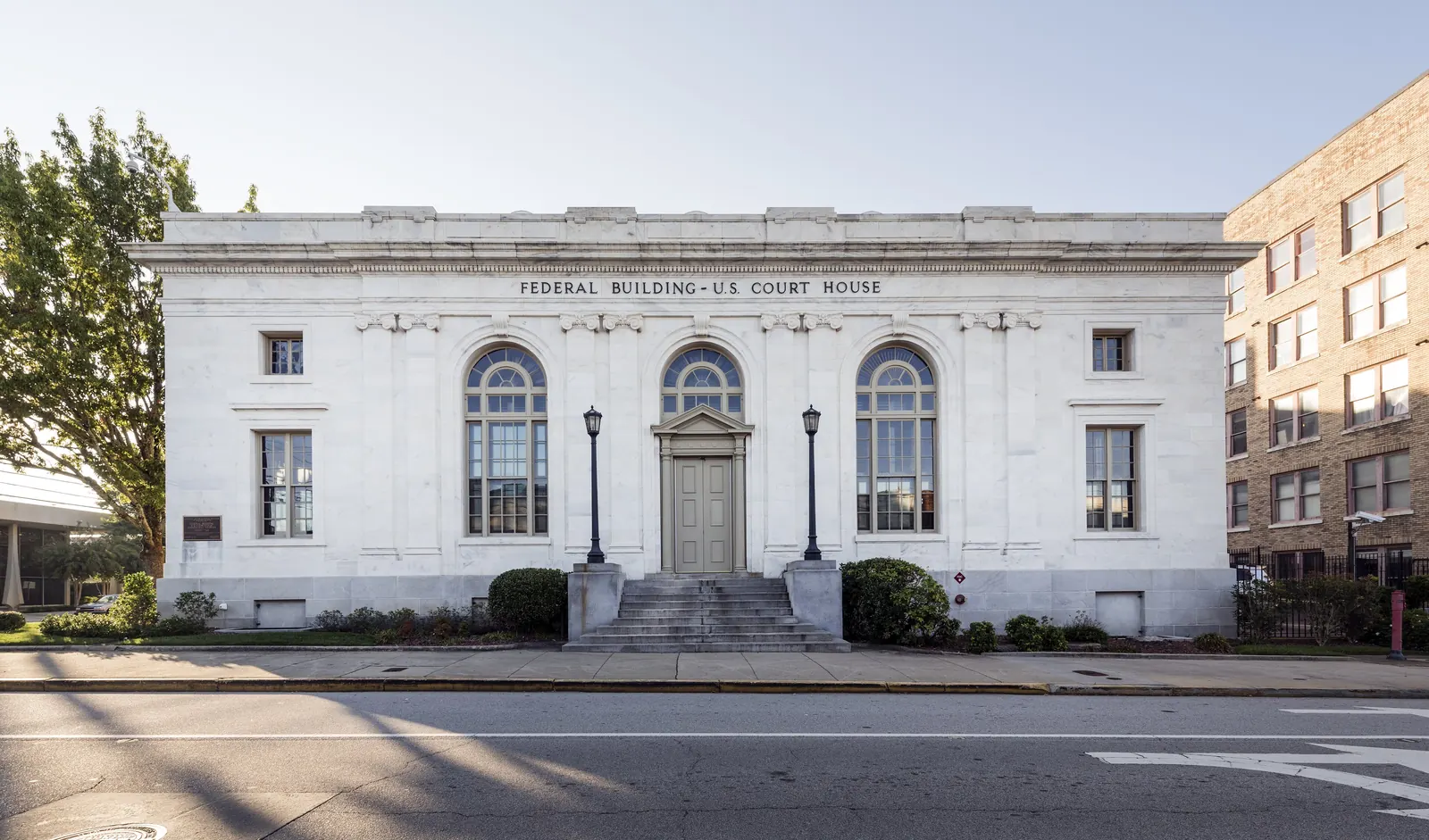
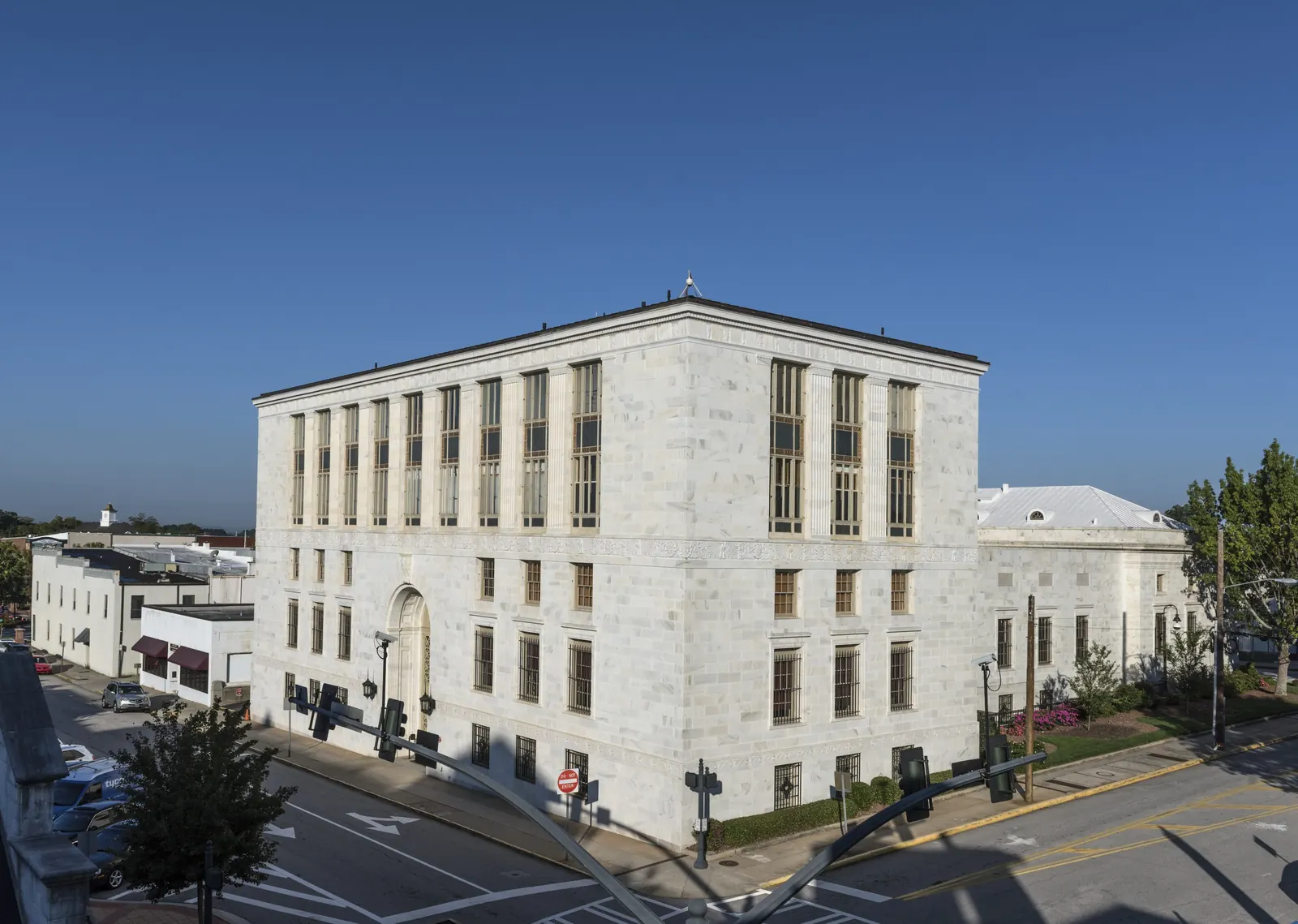
- The white-marble Federal Building and Courthouse opened in 1910 as the post office at Washington and Green streets and gained a four-story addition on Spring Street in 1936. It was one of the few downtown buildings not destroyed or heavily damaged by the tornado. National Register of Historic Places nomination: Federal Building and Courthouse, Gainesville (1974)
Walk them in order with the 1936 walking tour.
Poultry Capital, and a fork law
- Gainesville is nicknamed the "Poultry Capital of the World." The City credits Jesse Jewell, who after World War II built poultry into Georgia's largest agricultural crop, a $1 billion-a-year industry. City of Gainesville: History
- The City's official timeline records that in 1961 the Gainesville City Council voted to make it illegal to eat chicken with a fork. City of Gainesville: History
- Poultry Park, at 444 Jesse Jewell Parkway, honors the city's poultry industry with a chicken on top of a 25-foot marble obelisk. Local poultry industry leaders started the project, and the park was dedicated in 1977. City of Gainesville Parks & Recreation: Historic Parks; The Gainesville Times, "Ask the Times: Poultry statue went up in 1977"
- The Lighting of the Chicken features a 25-foot, 1,500-pound metal chicken sculpture. It is a separate piece from the Poultry Park obelisk, and the City lights it at Jingle Mingle on the Saturday before Thanksgiving. City of Gainesville: Downtown Events
Three nicknames
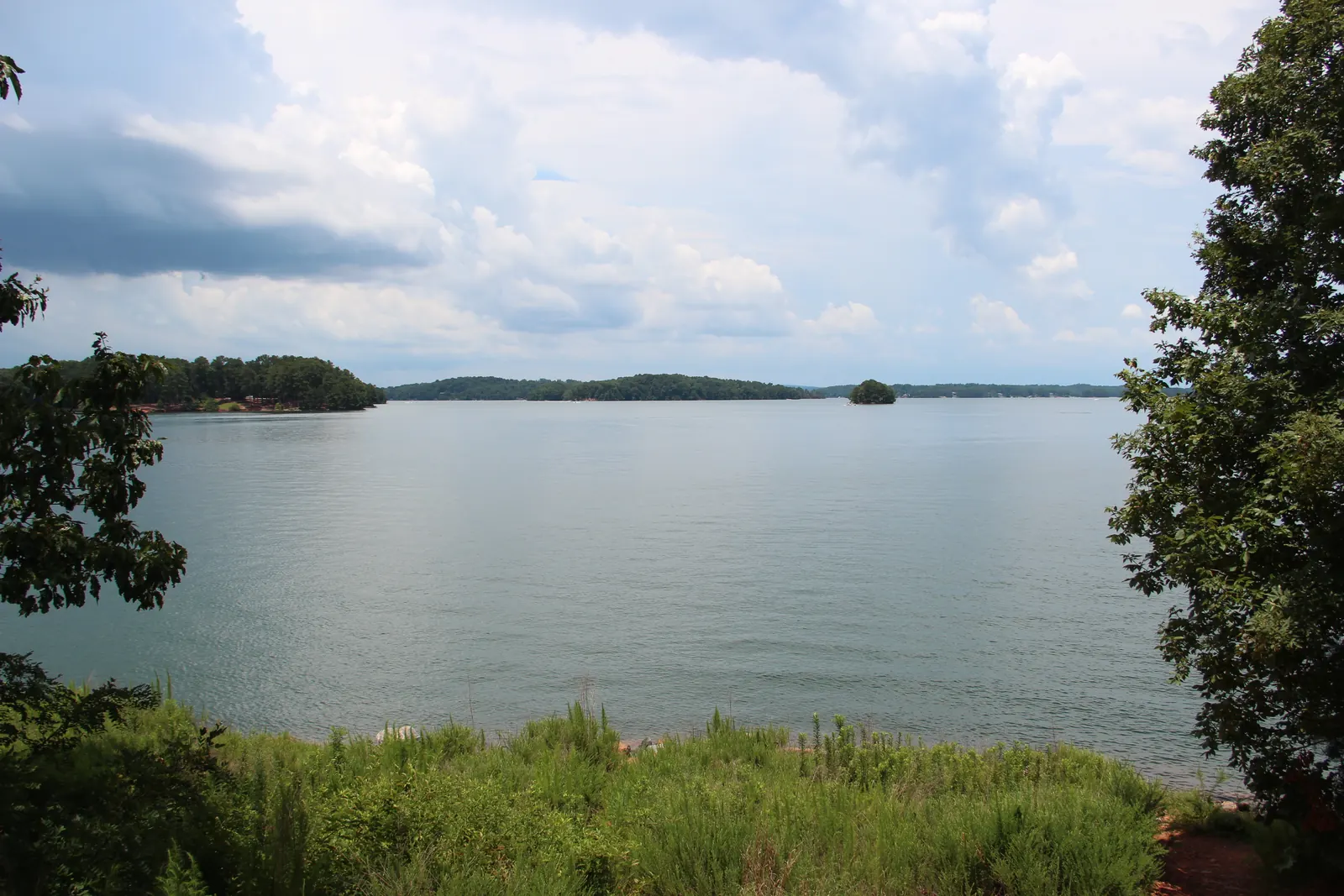
- This Gainesville is in Hall County, Georgia, on the north shore of Lake Lanier. Explore Gainesville calls it the "Queen City of the Mountains" and the "gateway to the Appalachians." Explore Gainesville (City of Gainesville tourism office): Downtown Parking
- During the 1996 Olympics, when Lake Lanier Olympic Park hosted rowing and canoe/kayak, an NBC broadcaster dubbed Gainesville the "Hospitality Capital of the World." City of Gainesville: History
So the same city is the Queen City of the Mountains, the Poultry Capital of the World and, since 1996, the Hospitality Capital of the World.
Questions
What is the chicken monument in Gainesville?
It is a chicken on top of a 25-foot marble obelisk in Poultry Park, 444 Jesse Jewell Parkway, honoring the city's poultry industry. Local poultry leaders started the project, and the park was dedicated in 1977. It is a different piece from the 25-foot metal chicken the City lights at Jingle Mingle each November.
Source: City of Gainesville: Historic Parks; The Gainesville Times (1977); City Downtown Events
Why is Gainesville called the Poultry Capital of the World?
The City's history credits Jesse Jewell, who after World War II built poultry into Georgia's largest agricultural crop, a $1 billion-a-year industry. Gainesville took the nickname from that. Poultry Park's chicken-topped obelisk and the yearly Lighting of the Chicken both nod to it.
Source: City of Gainesville: History
Is it really illegal to eat chicken with a fork in Gainesville?
According to the City's own timeline, in 1961 the Gainesville City Council voted to make it illegal to eat chicken with a fork. It's a well-loved piece of Poultry Capital lore. The timeline doesn't say anything about enforcement, so treat it as a fun fact.
Source: City of Gainesville: History
What happened in the 1936 Gainesville tornado?
On the morning of April 6, 1936, two large F4 tornadoes merged over downtown Gainesville. They killed 203 people, injured about 1,600 and caused roughly $13 million in damage. Seventy died when the Cooper Pants Factory collapsed. The storm is the fifth-deadliest tornado on the Storm Prediction Center's U.S. list.
Source: National Weather Service: weather history for April 6; NOAA Storm Prediction Center
Why is it called Roosevelt Square?
It honors President Franklin D. Roosevelt. He visited days after the 1936 tornado and promised federal help, and New Deal money rebuilt the courthouse and city hall. A monument to his visit declared those blocks the "Roosevelt Squares." Roosevelt returned on March 23, 1938 to dedicate the rebuilt civic center.
Source: NRHP nomination: Hall County Courthouse; The American Presidency Project; Digital Library of Georgia
Was Lake Lanier used in the Olympics?
Yes. In July 1996, Lake Lanier Olympic Park in Gainesville hosted the rowing and canoe/kayak events of the Atlanta Summer Olympics. The original timing tower still stands and is described as the last 1996 venue still used for its original purpose. An NBC broadcaster's "Hospitality Capital of the World" nickname for Gainesville dates from those Games.
Source: City of Gainesville: History; Explore Gainesville: Lake Lanier Olympic Park
Dates, rules and hours can change. The organisers have the final word: City of Gainesville downtown events